Media
Information

2026 / 09 / 18

This September, the world of manufacturing technology gathered at McCormick Place in Chicago. IMTS 2026 (Sept 14–19) ran under the theme "Achieve the Impossible," and the headline of this year’s show was the new Industrial AI Arena — bringing industrial AI, digital twins, machine vision and predictive maintenance together under one roof. The message from the floor was clear: manufacturing’s next leap is intelligence.
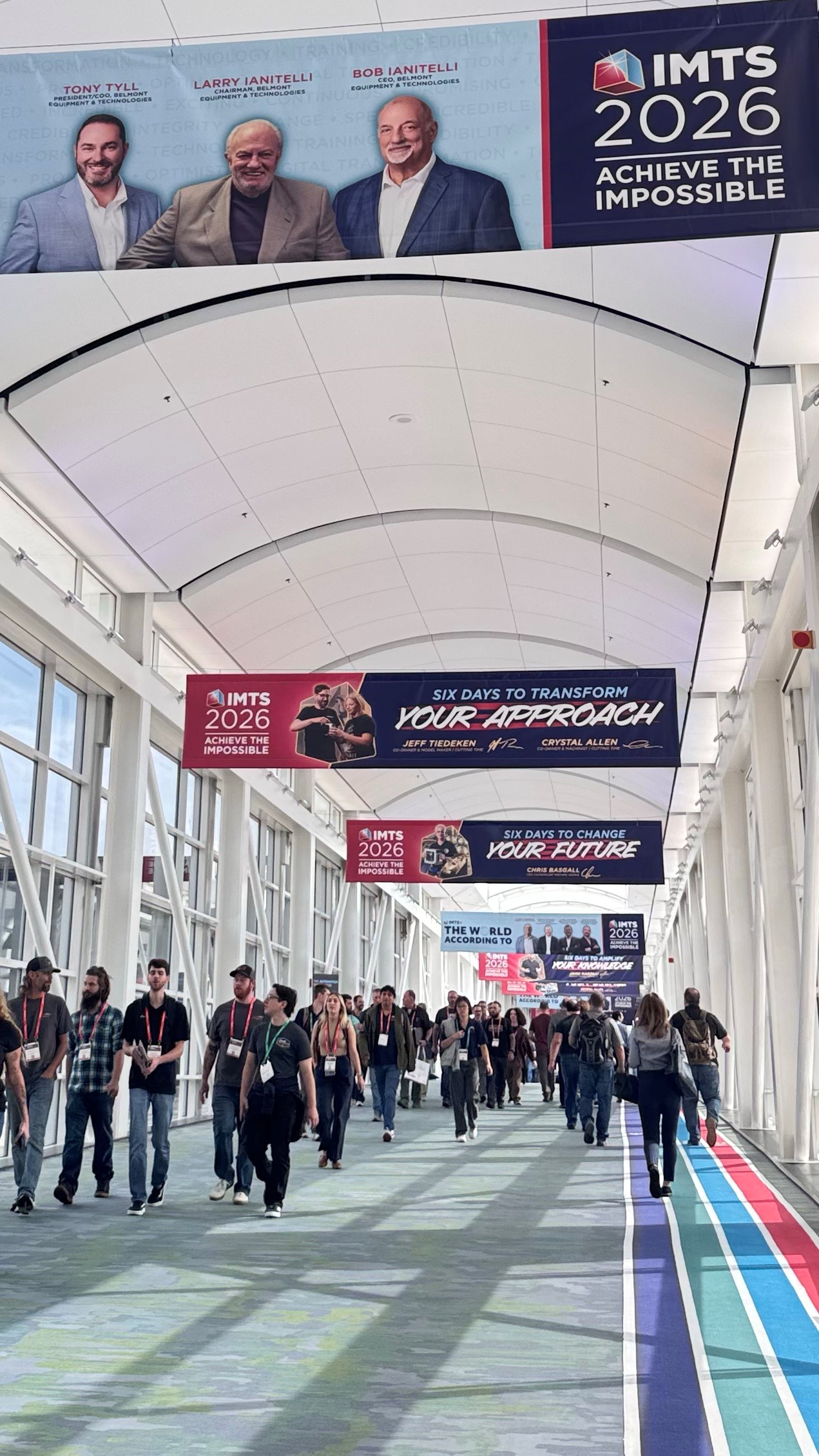 IMTS 2026 · McCormick Place, Chicago — "Achieve the Impossible."
But step outside, onto the Chicago River, and the city quietly reminds you of the other half of the story.
Chicago is the birthplace of the skyscraper. In 1885, the city stopped relying on ever-thicker walls to hold up tall buildings and turned instead to a precision steel skeleton. Everyone admired the height — but what actually held it up was the steel frame underneath, quietly carrying the load.
"Trust the load to precisely engineered steel" — that idea has not aged in more than a century. And in Chicago it lives not only in the skyline, but on the water.

Chicago is famous for its bascule bridges — for example, the downtown DuSable (Michigan Avenue) Bridge. How does a "Chicago-type" bascule lift a leaf weighing thousands of tons? The answer: a pinion turning against a curved steel rack. A motor drives the pinion, and the gear-and-rack pair converts that rotation into the raising and lowering of the bridge. One gear, one toothed bar, bearing an enormous load, turning rotation into precise, controlled motion — and it has done so for over a century.
(This isn’t folklore. The McCormick Bridgehouse & Chicago River Museum, which sits in the bridge itself, and technical documentation from bridge engineering firms both describe the rack-and-pinion drive.)
For us, this part isn’t a metaphor at all. It’s exactly what YYC makes.
Turning rotation into precise linear motion while carrying the load — that is the core value of the gear rack and pinion, and the reason it is everywhere in modern manufacturing:
Since our founding in 1980, YYC has focused on manufacturing precision gear racks and pinions — for more than 45 years. Our priorities are straightforward: tooth-profile accuracy, consistent material and heat treatment, and reliable load capacity under real-world conditions — because in these applications, the precision and service life of the transmission element directly determine how the whole machine performs.
Come back to that line on the show floor: "Achieve the Impossible." AI makes machines smarter — it can decide where an axis should go and when. But what actually gets it there, accurately and repeatably, stroke after stroke, is still the mechanical transmission underneath. The smarter the system, the higher — not lower — the demand on mechanical precision and reliability.
From the show floor to the skyline, from century-old bridges to today’s factories — the future is still built on precise steel.

